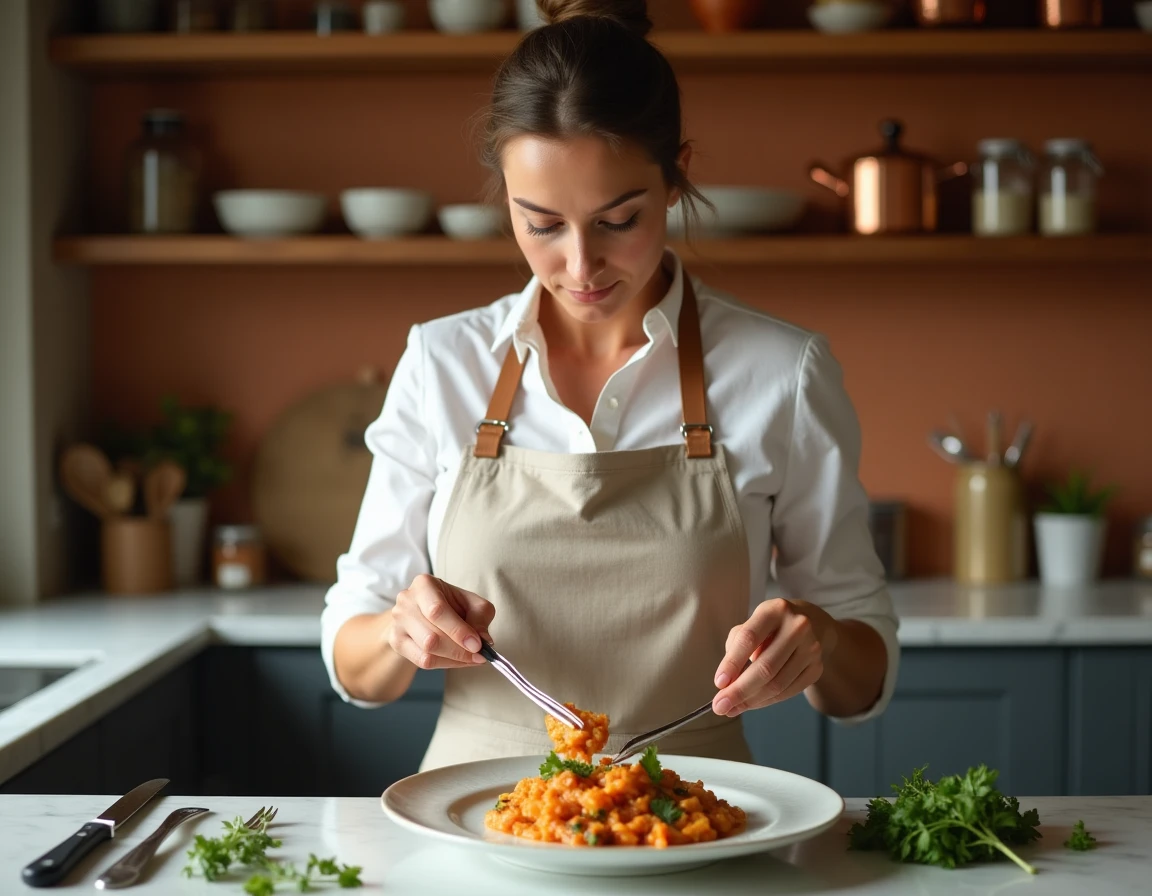
Hosting guests often generates more tension than pleasure. The problem does not stem from technical skill, but from the organization beforehand and a few cooking habits that most amateur cooks overlook. Successfully preparing dishes for a shared meal relies on concrete choices, not on an accumulation of spectacular recipes.
Batch cooking for hosting: preparing without losing quality
French-speaking culinary media has been structuring an approach for a few years that precisely distinguishes what can be prepared in advance from what should be done at the last minute. This distinction changes the game when hosting.
Sauces, broths, roasted vegetables, pie crusts, and most desserts that can be assembled at the last minute can be prepared one to two days in advance without losing flavor or texture. In contrast, cooking meats, frying, and final plating benefit from being done at the last moment. Confusing these two categories is the classic trap that turns a dinner into a stressful marathon.
The goal is not to do everything in advance, but to reduce the number of simultaneous tasks on the big day. A roast that has marinated since the day before, a vegetable garnish that is already cut and pre-cooked, a reduced sauce base waiting in the refrigerator: on the day of the meal, only assembly and short cooking remain. This freed-up time allows you to stay at the table with your guests instead of disappearing into the kitchen for an hour.
Kelly Brancato’s “Batch cooking” collection, updated in 2023 by Marabout, details this method with concrete schedules. Several amateur cooks who share their feedback online confirm one point: the gain in serenity is as important as the gain in time. To explore other concrete ideas, the tips from the Conseils Cuisine website also cover approaches to advance preparation suitable for everyday meals as well as more ambitious dinners.
Mastering salt and acidity in dish preparation
Progressive seasoning is the technique that most clearly separates a successful dish from a correct one. Adding all the salt at the end of cooking results in a one-dimensional outcome: the surface is salty, while the inside remains bland.
Salting at each stage (the cooking water for pasta or vegetables, the meat before searing, the sauce during reduction) allows the salt to penetrate the fibers and bring out the aromas specific to each ingredient. The result is a dish that is flavorful without tasting salty.
The often-overlooked role of acidity
A dish that seems to be lacking something is rarely lacking in salt. It almost always lacks acidity. A splash of lemon juice, a spoonful of wine vinegar, a few fresh tomatoes: acidity awakens flavors and creates contrast in the mouth.
This reflex applies to almost all families of dishes:
- Cream or butter-based sauces gain clarity with a few drops of lemon added off the heat
- Stews (casseroles, braises) handle a drizzle of vinegar at the end of cooking very well to revive flavors that have melded
- Chocolate or fruit desserts benefit from a pinch of fleur de sel, which acts as a natural acidity enhancer
Seasoning is not limited to salt and pepper. Learning to taste at each stage, then correcting with an acidic element before re-salting, avoids most bland or unbalanced dishes.
Cooking meats and resting: what really changes the result
Searing meat in a pan that is too cold or overcrowded creates a steaming effect: the surface does not brown, juices escape, and the texture becomes gray and mushy. The rule can be summed up in one sentence: very hot pan, few pieces at a time, no movement during searing.
The Maillard reaction, that golden and fragrant crust that forms at high temperatures, only occurs on the surface of dry meat. Taking the piece out of the refrigerator early enough for it to reach room temperature, then patting it dry with a paper towel, makes a visible difference from the first minute of cooking.

The resting phase after cooking, often sacrificed
Cutting meat immediately after cooking releases its juices onto the cutting board. Allowing it to rest under a sheet of aluminum foil for a few minutes lets the fibers relax and the juices redistribute. The result at tasting is significantly more tender.
This resting time also applies to thick fish and certain roasted vegetable preparations. Feedback on the ideal duration varies according to the thickness of the piece, but the principle remains the same: do not serve a protein as soon as it leaves the heat source.
Plating and deglazing: two chef techniques accessible to all
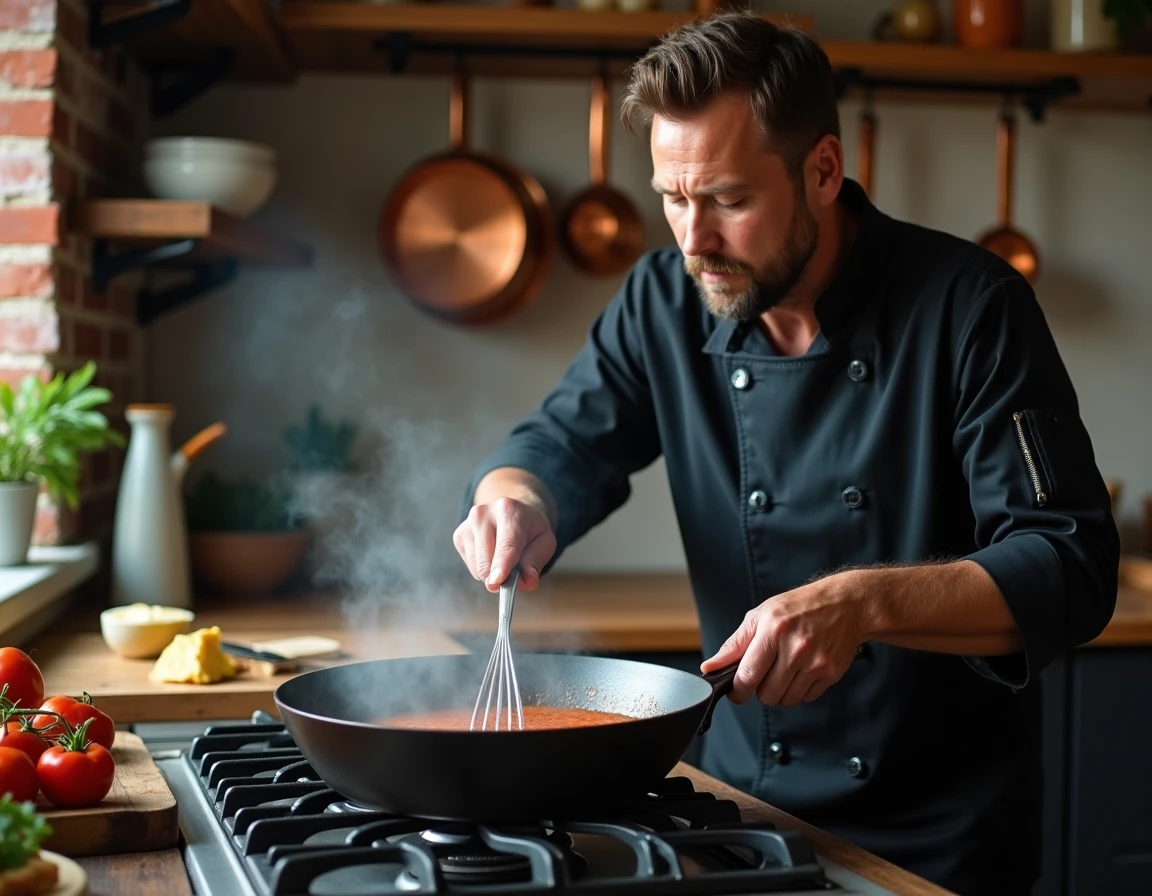
Deglazing involves pouring a liquid (wine, broth, fruit juice) into a still-hot pan after searing meat or vegetables. The caramelized drippings stuck to the bottom dissolve and form a concentrated sauce in seconds. This technique transforms a mundane cooking juice into restaurant-quality sauce.
Adding a cold knob of butter at the end of reduction gives this sauce a shiny appearance and a silky texture. It is a classic technique in French cuisine that requires neither special equipment nor advanced skills.
Plating as a signal of care
A well-presented dish does not require tweezers. It relies on three simple principles:
- Leave empty space on the plate, as an overloaded dish looks messy regardless of its taste
- Vary heights by stacking garnish and protein rather than laying everything flat
- Add a contrasting color element at the last moment (fresh herbs, zest, toasted seeds) to catch the eye
The eye eats before the mouth. A well-plated dish on a clean plate, with a drizzle of sauce traced rather than poured, gives the impression of a carefully prepared meal, even when the base recipe is simple.
The real lever to impress guests is not the complexity of the recipe, but the precision of a few repeated actions: seasoning progressively, searing at high temperature, allowing to rest, deglazing, plating with restraint. These reflexes are acquired dish by dish, without expensive equipment or formal training.