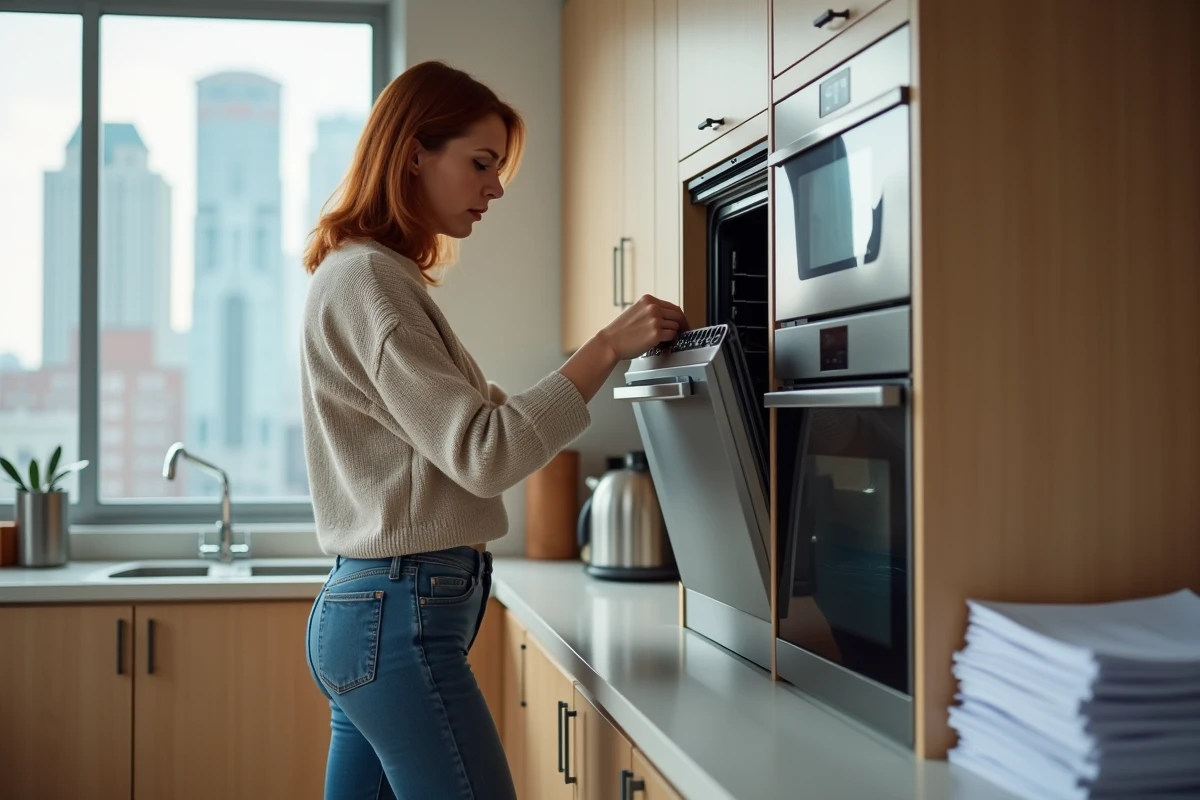
A breakdown of an oven in a rented accommodation does not distinguish between calendar or convenience: when it happens, the tenant’s daily life comes to a sudden halt, and responsibilities arise without warning. However, the law leaves no room for improvisation. Decree No. 87-712 of August 26, 1987, draws a clear line between minor repairs, which are the tenant’s responsibility, and the replacement of outdated equipment, which falls to the owner.
Some situations escape the rule: if the oven was installed by the tenant or if its origin in the lease remains unclear, the question of the bill becomes muddled. In these cases, it is the proof of maintenance, the origin of the appliance, or the exact nature of the breakdown that tips the balance.
Understanding the distribution of responsibilities between tenant and owner
In the context of a residential lease, not everyone has the same obligations. Providing a decent housing: this is the starting point imposed on the owner, with functional equipment ready for use as soon as the keys change hands, in accordance with Law No. 89-462 of July 6, 1989. A small nuance: the mention of the oven in the lease and its original condition play a central role when it comes to determining who pays for what in the event of a technical issue.
The Decree No. 87-712 of August 26, 1987 outlines the scope of rental repairs. Basic maintenance, seals, light bulbs, routine cleaning, remains the tenant’s responsibility. But as soon as an appliance fails due to normal wear or obsolescence, the replacement falls to the owner. The famous obsolescence grid attached to the lease provides a reference basis and avoids arbitrariness. For the tenant, vigilance is expressed differently: promptly informing the owner in case of a breakdown and ensuring that the appliance has been regularly maintained.
Here is a table that outlines how the costs are distributed according to the cause of the breakdown:
| Cause of the breakdown | Who is responsible? |
|---|---|
| Normal wear, obsolescence | Owner |
| Improper use, lack of maintenance | Tenant |
| Minor repairs (seals, light bulbs…) | Tenant |
Sometimes a simple diagnosis is enough to clarify things. From the first breakdown, the question of who pays for the replacement of an oven, tenant or owner systematically comes to the table. Everything hinges on the proof: inventory, purchase invoice, or technician’s report tip the balance between the tenant’s or landlord’s responsibility.
Replacing an oven in a rental: who should pay according to the cause of the breakdown?
In practice, the maze of responsibilities quickly becomes apparent. If the oven, owned by the landlord and listed in the lease, breaks down due to obsolescence or normal wear, the owner must cover the replacement. The law of July 6, 1989, leaves no room for doubt here: ensuring the proper functioning of equipment is a responsibility that cannot be dismissed.
But there are also more nuanced breakdowns. Imagine, for example, an oven whose door has been forced or whose seals are black with grease: negligence or improper use, the tenant’s responsibility then becomes clear. The same principle applies to the replacement of small parts, light bulbs, handles, or grids: it is the occupant’s duty to pay.
To have an overview, here are the different scenarios that tenants and owners may face:
- Breakdown due to normal wear: the owner’s responsibility
- Breakdown due to lack of maintenance or improper use: the tenant’s responsibility
- Replacement of wear parts (handles, seals, light bulbs…): the tenant’s duty
The inventory at the start and the obsolescence grid attached to the lease serve as reminders in case of potential disagreements. Nothing replaces the opinion of an independent technician to cut through false interpretations when the debate becomes stuck.

What to do in case of disagreement or dispute over responsibility?
Sometimes, replacing an oven in a rental turns into a cacophony: endless debates about maintenance, divergent interpretations of the obsolescence grid, lack of solid evidence… It all starts with confronting arguments, relying on what truly exists: inventory, maintenance invoices, dated evidence. It is the details that will help shed light on the reality.
If dialogue becomes stuck, seeking an independent expert then becomes the best option: only a professional diagnosis can distinguish between natural obsolescence and blatant negligence. Home insurance will not cover the costs of a trivial mechanical breakdown or a failure due to wear: its intervention stops at major disasters, nothing more.
When the blockage persists, the departmental conciliation commission can be approached at no cost. This body attempts a quick mediation to defuse the conflict before considering a lengthy and uncertain judicial process. This step remains a valuable stage to cut short sterile antagonisms.
In the event of a proven disagreement, several reflexes should be adopted to advance in resolving the dispute:
- Collect and organize evidence: inventory, maintenance invoices, up-to-date obsolescence grid
- Seek the opinion of a technician or independent expert if necessary
- Contact the departmental conciliation commission as a last resort
In the background, every oven breakdown reminds us of the pact that binds owners and tenants: a balance made of assumed responsibilities, shared vigilance, and open exchanges. A breakdown, and everything sometimes hinges on a handle, a seal… or the silence between two parties. This is the discreet mechanism of a daily life that must remain simple, even when the appliances fail in the middle of the week.