
Every year, thousands of students have to find accommodation in a city they have never set foot in. Whether they are moving for an Erasmus program, an internship in France, or a work-study placement far from home, searching for accommodation remotely comes with the same risks: fake listings, security deposits paid without a viewing, and landlords who become impossible to reach after the lease is signed.
The rental market remains tight in most university towns, and distance makes every challenge harder.
Verify the landlord’s identity and confirm the property exists before making any payment
The first mistake students moving away from home make is paying a security deposit or signing a lease without confirming two basic details: the landlord’s identity and the property’s physical existence. These checks take longer when you are searching remotely, but they are still possible.
A legitimate landlord will provide proof of ownership (property tax notice, title deed, or notarial certificate). If they evade or delay the request, treat it as a warning sign. For rentals handled by an agency, checking that it is registered with the real estate agents’ register (professional license issued by the CCI) helps ensure that your contact is operating legally.
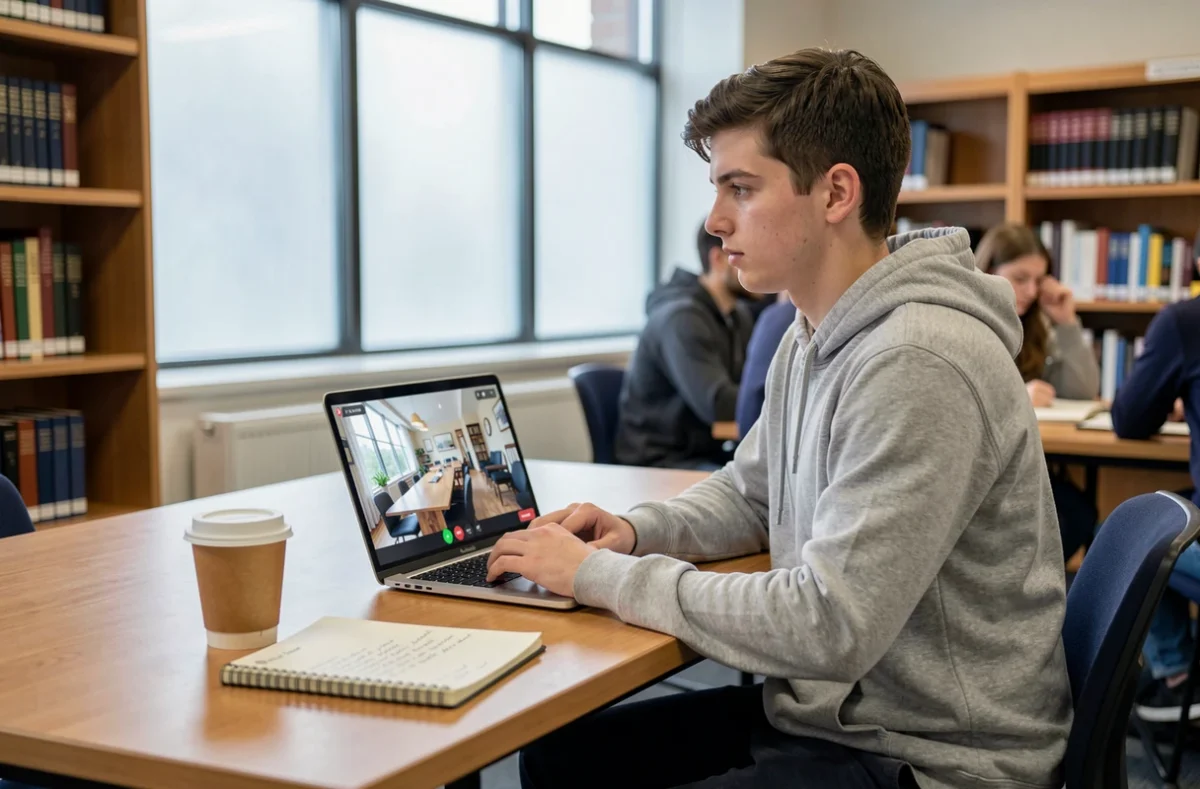
You can confirm that the property exists in several ways: request a live video tour (not a pre-recorded video), compare the address with street views available online, or ask a local contact (student services office, association, or friend nearby) to visit the building. Never transfer money before seeing the property live, even through a screen.
Platforms specializing in student accommodation provide an initial layer of screening because they check listings before publishing them. Some services go further by handling the search and verifying properties: Immorush for students on the move offers support that includes checking listings and securely connecting students with landlords.
Guarantors and security deposits: what to watch out for before signing remotely
The security deposit is a major concern for students renting remotely. Its amount is regulated by law and varies depending on the type of rental. These limits apply throughout France, regardless of the platform used.
A landlord who asks for a bank transfer before the lease is signed or refuses to put the refund terms in writing is not following standard legal practice. The deadline for returning the deposit is regulated by law: check it in the contract before signing.
What to check in the lease before signing
- The exact security deposit amount and payment method (bank transfer or check). Refuse any cash payment or money order, as these leave no usable record in the event of a dispute.
- The terms for returning the deposit: the deadline, the move-out inspection process, and the landlord’s mailing address. If these clauses are missing, ask for them to be added before signing.
- The lease term and conditions for early termination, which vary by contract type (standard lease or mobility lease).
- Whether the lease includes a joint liability clause for shared accommodation, making each tenant responsible for the full rent.
The mobility lease deserves particular attention for students on internships or temporary training programs. This contract, which applies only to furnished accommodation, prohibits the landlord from asking for a security deposit. A guarantor can be covered by rental guarantee schemes designed for students.
Searching for student accommodation remotely: tools and a practical approach
Remote searches work best when you follow a clear sequence rather than spreading your efforts across ten platforms at once.
Start with the international relations office or accommodation service at your host institution. These services often have lists of partner residences and vetted landlords. Students tend to overlook them and go straight to general listing websites.
Focusing your search on two or three specialist platforms cuts through the noise. Student accommodation websites let you filter listings by rental period, proximity to campus, and budget. Social media groups can still be useful for finding shared accommodation, but the risk of scams is higher because listings are not always systematically moderated.
Arrange remote viewings without losing control
Live video tours have become standard. Ask the landlord or agent to show every room, the common areas, the view from the windows, and the fixtures and fittings (meters, locks, and the condition of the walls). Recording the video call, with the landlord’s consent, gives you a reference point for the move-in inspection.
If the property is in a French university town, some local missions and student associations offer viewings through a trusted third party. Asking someone you know or contacting an alumni network from the same program is also a reliable option.

Student accommodation budget when moving away: plan for more than just rent
Rent is only part of the real cost of moving in. Agency fees (where applicable), mandatory home insurance, utility and internet subscriptions, and basic household items all add to the first month’s expenses.
Set aside the equivalent of three months’ rent before you leave to cover these costs without financial strain. Housing assistance (APL or ALS) is only paid after the CAF has processed your application, which usually takes several weeks.
For international mobility, Erasmus grant payments follow a schedule set by each institution. The first payment sometimes arrives after you have moved in, meaning you may need to cover your accommodation costs yourself at first.
Searching for accommodation remotely can be challenging, but verification tools, suitable contracts such as the mobility lease, and support services can help reduce the risks. Keep this rule in mind from start to finish: never make a payment without tangible proof of the landlord’s identity and the property’s existence.