
A container of tabbouleh slipped into the freezer and suddenly, the routine shifts. This seemingly innocuous salad does not behave like other dishes, especially when you make it yourself. The culprits: raw ingredients, an abundance of fresh herbs, and flavors that do not always withstand the bite of the cold.
Homemade or industrial tabbouleh: what are the differences when it comes to freezing?
Making your tabbouleh at home prioritizes the taste of freshness, but also involves juggling ingredients that do not react well to freezing. Out of the freezer, the mint darkens, the parsley crumbles, the tomato softens, and the cucumber loses its firmness. The dish’s profile changes: the flavors are paler, the acidity of the lemon becomes timid, and the olive oil is forgotten.
On the industrial side, tabbouleh withstands the shock better. Manufacturers take care with their formula: smaller vegetables, controlled moisture, and clever additives. As a result, couscous or bulgur withstand the cold without damage, peppers and herbs remain acceptable, and the texture varies little. This stability is not a matter of chance but a process designed to withstand freezing.
The difference does not stop there. Homemade tabbouleh can last one to three months in the freezer before losing its flavor, while the industrial version can last longer without too much damage. Everyone chooses their recipe, but it’s better to know the limits of your dish before anticipating a long storage period in the cold. To grasp all the nuances depending on the source and compositions, there is a dedicated article: freezing industrial tabbouleh on Index Site.
Behind a simple gesture like placing a bowl in the freezer, there is ultimately a whole game of adjustments to anticipate: chopping finely, measuring, packaging in portions, choosing the right airtight container. Whether homemade or industrial, each option comes with its codes to face the challenge of the cold, and the result is never quite the same.
Can you really freeze tabbouleh without altering its texture and taste?
Freezing your tabbouleh also means accepting the loss of some of what makes it renowned. Back from the freezer, the texture changes: the parsley and mint seem soft and discolored, the tomato and cucumber lose their firmness, and the couscous or bulgur gain density and lose lightness.
In terms of taste, the freshness is less pronounced. The acidity of the lemon fades, the oil softens, and some flavors become subtle. The peppers and the grain part hold up better, but the overall dish is still marked by this cold passage. However, no tabbouleh comes out completely intact, whether homemade or industrial.
It is common to observe:
- Homemade tabbouleh, full of raw vegetables, changes more in appearance and taste.
- The industrial version, designed to survive the cold, suffers less loss.
To bring back some zest after thawing, nothing stops you from adding a splash of fresh lemon, some chopped herbs, or a hint of olive oil. This gesture revives the salad, even if it no longer matches the freshly made version.
Practical tips for successfully freezing and thawing your tabbouleh
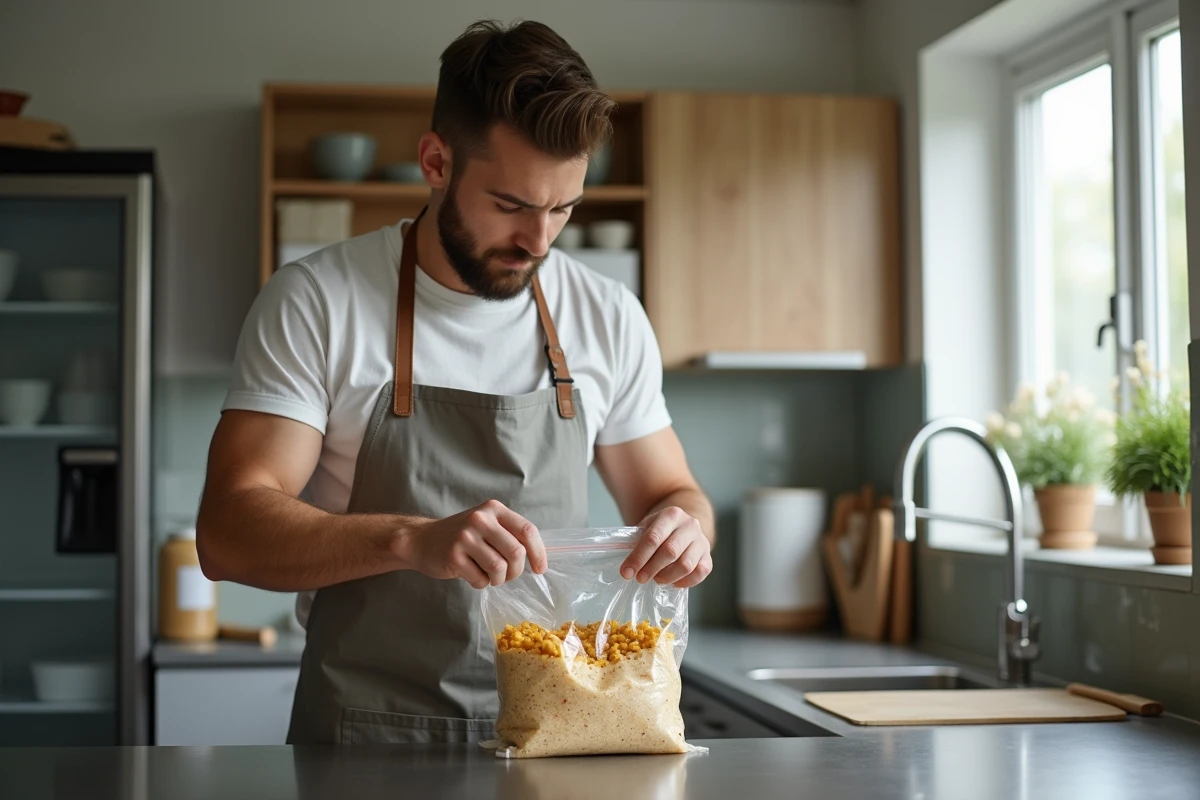
Adopting a few simple precautions helps better preserve your tabbouleh in the freezer. Once the dish is ready, let it cool completely at room temperature. Then, divide it into individual portions in airtight containers: this way, there is no unnecessary frost, and you only take what you need. A dated label on each container helps keep track of time.
Tabbouleh can last one to three months in the freezer. After that, the texture deteriorates significantly, making the dish much less enjoyable. For those who prepare meals in advance, these steps limit food waste and allow for a varied table with a ready-made dish.
Here’s what to remember to limit disappointments:
- Cool the tabbouleh thoroughly before freezing.
- Divide into individual portions to take only what is necessary.
- Choose well-sealed containers to maintain texture.
- Always remember to date each portion.
For thawing, prefer a twelve to twenty-four-hour stay in the refrigerator: this time better protects the flavors and structure of the dish. If you are in a hurry, leaving it at room temperature works too, or briefly reheating in the microwave, with a texture that may then soften even more. A simple squeeze of lemon and some fresh herbs can bring back some vibrancy to the salad, resulting in a dish that, while not matching the freshly made tabbouleh, remains quite pleasant on the palate.
Neither homemade nor industrial versions come out unscathed from the freezer, but with vigilance and tips, tabbouleh retains enough character to accompany a meal without losing the memory of freshness. At your next freezing gesture, remember: nothing replaces the balance of homemade, but you can always revive your salad; sometimes, it just takes a simple twist of the lemon grinder.