
One size does not fit all, even when the label claims it does. Manufacturers apply different sizing standards depending on the brands or countries, making classic references often misleading. A poorly chosen size leads to slipping, creasing, or persistent discomfort throughout the day.
At first glance, choosing socks seems trivial. However, blindly relying on a simple number on the packaging can quickly lead to disappointment. With vague guides, imprecise measurements, and differences in standards from one country to another, it can be hard to navigate. This is how many end up with failed purchases, convinced they followed the rules, while the brand in question sometimes plays with its own codes.
Why sock size makes all the difference in daily life
Comfort, support, and durability: everything hinges on this. A sock that is too loose ends up bunching in the shoe, forming uncomfortable folds and can cause friction underfoot. If it’s too tight, it constricts, impedes circulation, and wears out quickly. Comfort is not just about a soft feel: it protects against blisters and pressure points, especially if the day promises to be long, whether hiking or during sports training.
This observation is even more pronounced with technical models. Hiking socks made from wool or technical materials must fit the foot without excess or tension, or they risk losing all effectiveness: moisture is no longer absorbed, and protection diminishes. As for the cuff height, it must adapt to the shoe worn: too short, the ankle remains exposed; too high, it can become uncomfortable over the hours.
A thoughtful choice also helps prolong the life of your socks. A well-fitted pair retains its elasticity, remains effective against moisture, and withstands repeated washing better. Socks offered in multiple sizes prove to be precise, suitable for all body types, both men and women.
Given the abundance of models—sports, casual, wool, or microfibers—turning to a sock size chart becomes a no-brainer. This reliable reference, based on shoe size and actual foot length, eliminates guesswork. Betting on accuracy from the start ensures lasting comfort and respects the anatomy of the foot day after day.
How to know if you are wearing the right sock size?
The foot never lies. If the sock doesn’t fit, it protests, sometimes quietly: discomfort, folds, friction, red marks, or a feeling of constriction. The choice of size is verified as soon as you put it on. The material should hug the foot without excess tension or surplus at the heel or toes. One detail to watch: the seam should stay in place, neither slipping under the foot nor riding up unnecessarily.
A well-fitted sock never bunches under the arch. It leaves no red marks at the ankle: if the mark persists, it means it is too tight, which can be problematic for compression or sport models. Conversely, a sock that twists in the shoe or comes off by itself indicates a size that is too large.
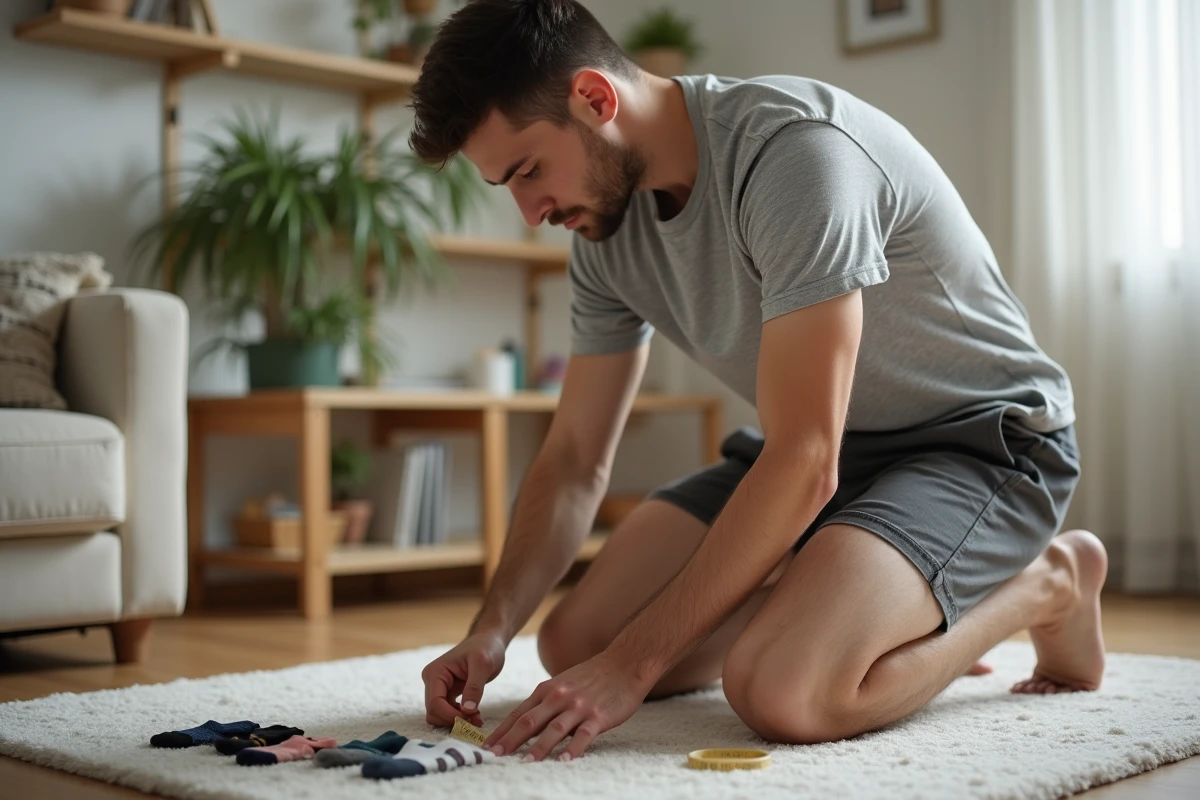
To go beyond the feel, there is a simple method: measure the length of the foot in centimeters. Place the heel against a wall, mark the tip of the big toe, then transfer the measurement to a serious size chart. This correspondence between centimeters and shoe sizes refines the choice, especially if your foot is between two sizes or has a high instep.
To summarize, here are the three elements to systematically check:
- Foot length: this is the foundation of a reliable choice.
- Exact shoe size: check the equivalence provided in the brand’s size guide.
- Comfort while wearing: no bunching, no discomfort, consistent support from morning to evening.
This level of precision becomes essential for sports or hiking socks. The fit directly impacts performance, blister prevention, and the lifespan of the pair. Taking the time to refine the size is investing in long-term well-being.
Size charts and practical tips to avoid mistakes
The size chart remains the best ally to avoid disappointment when choosing socks, regardless of the model. A rigorous guide provides a clear correspondence between foot length in centimeters and the size to remember. The key: measure the bare foot, heel against the wall, then transfer the obtained value to the corresponding chart.
Example of correspondence
| Foot length (cm) | Shoe size | Available sock sizes |
|---|---|---|
| 22-24 | 35-38 | Women, children |
| 25-27 | 39-42 | Men, women |
| 28-30 | 43-46 | Men |
Here are some tips to optimize your selection:
- Check the availability of sizes directly on the chosen product page.
- Regularly consult the updates of size charts: some models change from season to season.
- Prioritize a selection that matches each use: hiking, sports, or casual.
The right choice should leave nothing to chance. It relies on concrete criteria: precise measurement, attention to material and cut. Choosing socks wisely is giving your feet the comfort they deserve, day after day.