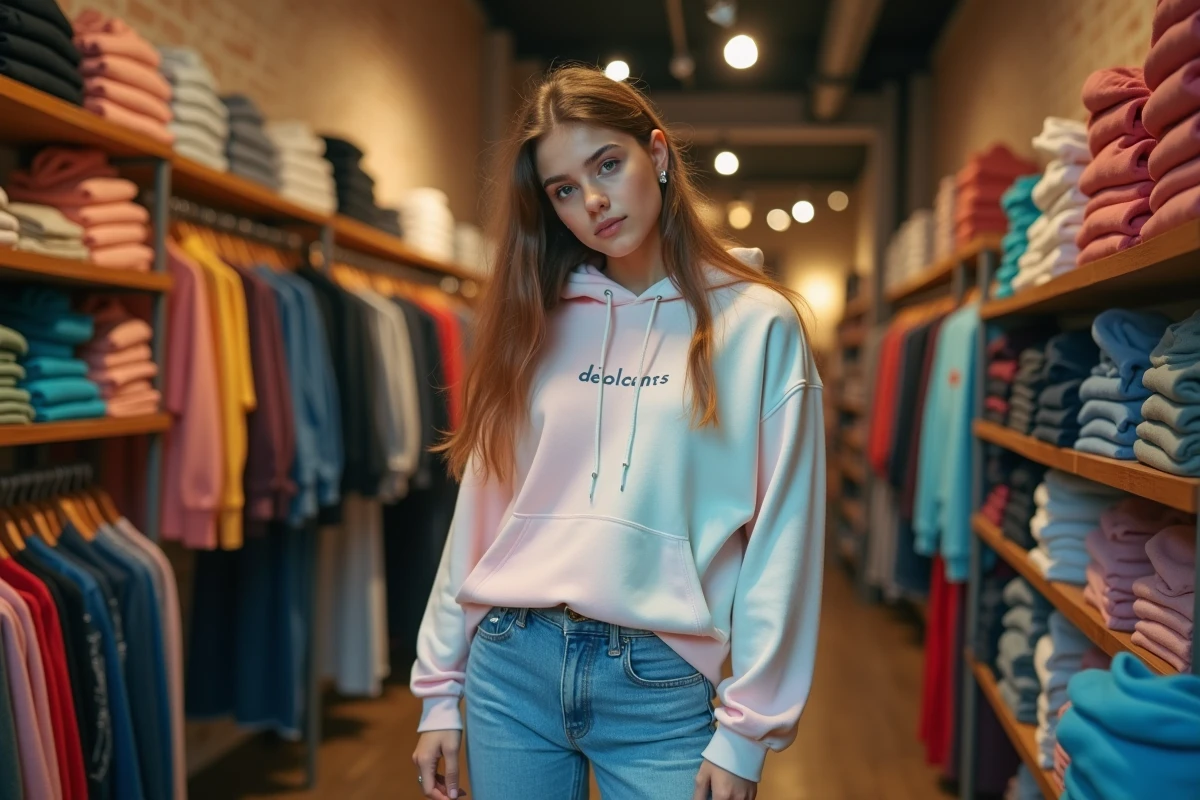
The clothing preferences of teenagers are evolving at a pace that market studies struggle to keep up with. The Kantar report “Gen Z Fashion Insights 2026” confirms a shift in affinities towards brands positioned on perceived authenticity, while classic streetwear is losing ground among the younger crowd. The teenage fashion market in France is now structured around signals sent on TikTok and informal resale circuits that escape traditional radars.
To explore in detail the trendy brands for teens on A fashionista, one must first understand what drives these choices, beyond just the logo.
Technical sneakers from Salomon and rejection of “dad” sportswear among teens
Since autumn 2025, a clear shift has been observed in high school hallways. Salomon’s technical sneakers, originally designed for trail running, have become a marker of everyday urban style. Five TikTok influencers interviewed in the podcast “Teen Trends France” (episode 47, January 2026) describe a massive rejection of so-called “dad” sportswear collaborations, targeting New Balance and Adidas Campus.
The mechanism is simple: these models, widely adopted by thirty-somethings and forty-somethings, lose their distinction in the eyes of teens. Wearing a pair of New Balance 550s in 2026 means wearing the same thing as one’s father or mother. The Salomon XT-6, on the other hand, conveys a technical outdoor imagery that has not yet been co-opted by the adult mainstream.
This rejection does not affect Nike in the same way. The brand maintains a solid base thanks to its limited collaborations and presence on resale platforms. In contrast, Adidas Campus and the most widely distributed New Balance models are experiencing a rapid decline in popularity, precisely because their commercial success has made them commonplace.
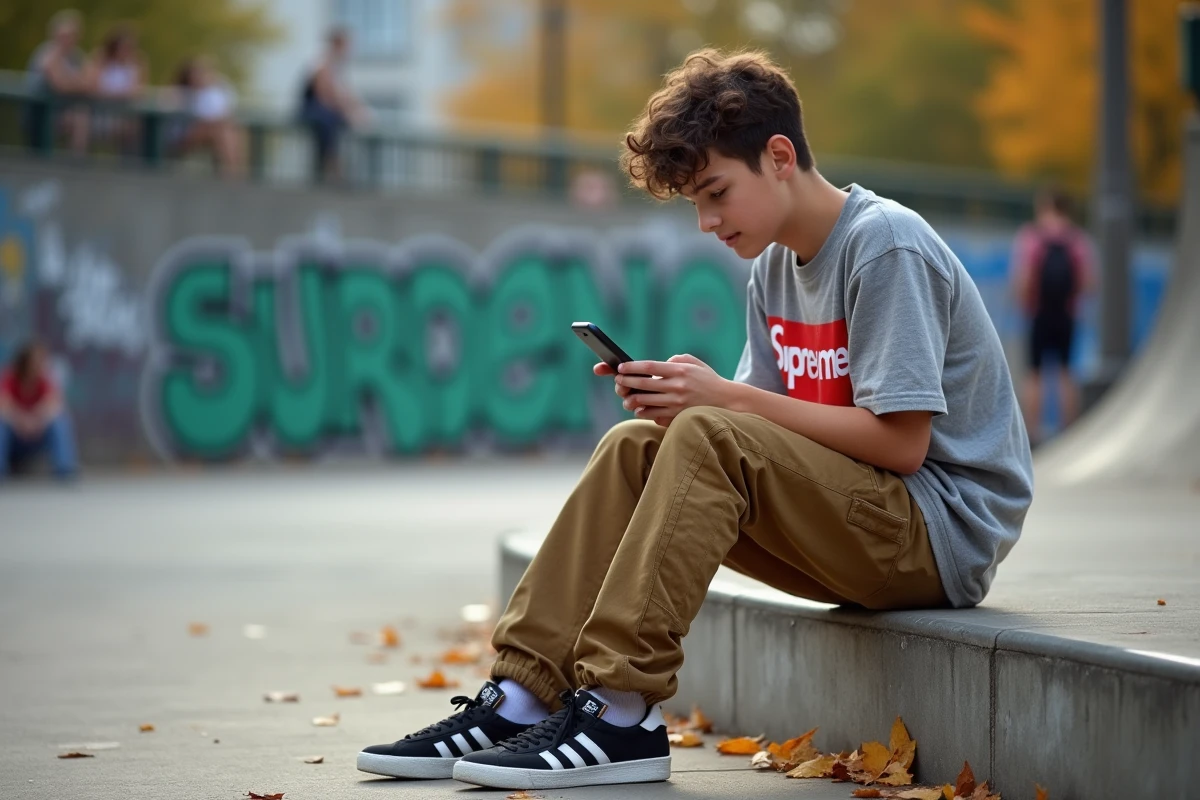
Scandinavian brands and “quiet luxury”: the rise of & Other Stories among teens
The Launchmetrics study “Teen Brand Affinity Europe Q1 2026” highlights a less visible but structuring trend: teens increasingly prefer Scandinavian brands over Zara. & Other Stories, in particular, is gaining ground thanks to a positioning perceived as more authentic on social media.
“Quiet luxury,” popularized by series like Succession, has filtered down to middle and high school students. Pieces without visible logos, clean cuts, and materials that “look more expensive than they cost” correspond to a new aspiration: to stand out through discretion rather than display.
Zara remains heavily frequented, but its image suffers from overexposure. Teens looking to differentiate themselves turn to brands whose names are not immediately recognizable to everyone. This is a classic mechanism of social distinction, applied to a generation that deploys it via TikTok and Instagram rather than in the schoolyard.
WhatsApp resale groups and peer-to-peer lending: accessible luxury for teens from modest backgrounds
Traditional marketing analyses measure in-store and online purchases. They overlook a parallel circuit that structures access to brands for a large portion of teenagers: WhatsApp resale groups among peers.
The process is well-established. A teen acquires a branded item (often via Vinted or on sale), wears it for a few weeks, then resells it in a local WhatsApp group at a reduced price. The next buyer does the same. A single jacket can pass between three or four owners in a few months, each accessing it for a fraction of the original price.
- Peer lending works like a shared wardrobe, especially for pieces worn at events (parties, photos for social media)
- WhatsApp resale groups, organized by high school or neighborhood, sometimes have several dozen active members with tacit rules of trust
- Some teens combine second-hand purchases on Vinted with local resale, creating a form of micro-commerce that allows them to refresh their wardrobe without a significant budget
This circuit makes official sales statistics partially misleading. A teenager can wear Ralph Lauren or Jacquemus without ever having bought these brands in-store. The visibility of a brand in high schools does not reflect direct sales, but an ecosystem of circulation of items that the brands themselves do not measure.
European regulation and marketing targeting teens: what changes in 2026
The EU regulation 2026/1042 on the protection of minor consumers, published in the Official Journal of the EU on February 5, 2026, introduces new constraints for brands targeting teenagers. Influencer marketing practices involving minors are now subject to stricter regulations at the European level.
This regulation directly impacts the business model of certain fashion brands that rely on teenage micro-influencers to promote their products on TikTok. Sponsored partnerships with minors must adhere to enhanced transparency rules, which could change the way trends spread.
Field feedback varies on the actual impact of this text. Some observers believe that teens will circumvent these rules by posting non-sponsored content motivated by the desire for visibility. Others anticipate a shift of influence towards young adult content creators (18-22 years old) who will serve as intermediaries to a younger audience.
Stated sustainability and actual sustainability: what teens are really buying
Sustainability is among the stated values of Generation Z. Surveys regularly show that young consumers claim to prioritize responsible brands. However, the available data does not allow us to conclude that this discourse systematically translates into purchasing actions.
The success of second-hand shopping (with Vinted at the forefront) stems as much from economic logic as from ecological conviction. Buying second-hand allows access to branded items at reduced prices, aligning with the logic of the WhatsApp groups mentioned earlier.
- Brands that communicate about sustainability without tangible proof lose credibility among the most informed teens
- Price remains the primary criterion for actual choice, ahead of production ethics
- Second-hand shopping functions as a compromise between brand desire and budget constraints, more than as a militant act
The gap between stated values and purchasing behaviors remains a constant that brands must integrate into their strategy. Teens who wear technical Salomon or & Other Stories do not do so primarily for the planet, but because these pieces allow them to stand out in a logo-saturated universe.
The preferences of teenagers regarding brands reflect broader social dynamics: the need for distinction, budget constraints, and informal circulation of clothing. The brands that will dominate this segment in the coming months will be those that understand that the point of sale is no longer the only place where desirability is at stake.